19 Mayıs 2016 Perşembe

Carpe Diem/ Seize the Day

Odes by Horace
23 BC
Lady Selina Meade by T.Lawrence 1769-1830


Ask not ('tis forbidden knowledge), what our destined term of years,
Mine and yours; nor scan the tables of your Babylonish seers.
Better far to bear the future, my Leuconoe, like the past,
Whether Jove has many winters yet to give, or this our last;
This, that makes the Tyrrhene billows spend their strength against the shore.
Strain your wine and prove your wisdom; life is short; should hope be more?
In the moment of our talking, envious time has ebb'd away.
Carpe Diem (Seize the present); trust tomorrow e'en as little as you may
Anton Raphael Mengs - The night


Kaç sene zamanımız kaldığını sorma, (çünkü bu yasaktır);
Ne benimkini ne seninkini, falcılara da gitme;
Geleceğe tahammül et, geçmişi sev;
Daha başka kışlar görebilecekmiyiz? Yoksa bu sonuncusu mu?
 Şuna buna endişelenmek dev dalgaları sahile vurdurur, enerjilerini tüketir,
Şarabını süz, aklını çalıştır; hayat kısa, daha çok ümitvar ol.
Biz şimdi burada konuşurken kıskanç  zaman kaçtı gitti...

Anı yaşa, yarına fazla güvenme…


-Mevlananın deyişiyle dem bu demdir...


Ceviri Elif Erkmen

18 Mayıs 2016 Çarşamba

Firtina/Cesare Pavese

Aveva la strana abitudine 
di non raccontare nulla. 
Aveva la tempesta dentro 
e nessuno lo notava.

 Cesare Pavese 

(9 September 1908 – 27 August 1950) was an Italian poet, novelist, literary critic and translator. He is widely considered among the major authors of the 20th century in his home country.

Claude Monet


Garip bir huyu vardı,
Hic bir sey anlatmazdı
Bir gün içinde fırtına koptu;
Kimsenin haberi olmadı…


Cesare Pavese 


Bu şiir  1908 ve 1950 yılları arasında yasamış Italyan şair ve yazar , edebiyat eleştirmeni ve çevirmen
Cezare Pavese'ye aittir. Kendisi 20. yüzyılda yaşamış en önemli Italyan yazarlardan biri sayılmaktadır.

Çeviri Elif Erkmen

Cezare Pavese


17 Mayıs 2016 Salı

Sultan Ahmet 1940’s/ Ertugrul Mat


Sultan Ahmet 1940’s

During 1940’s Sultan Ahmet Square (formerly the Hippodrome of Constantinople) in Istanbul was not grassy field like it is today but it was rather a barren field where young people played soccer.  Sirkeci, Cankurtaran and Alemdar clubs were playing there.

During summer months RidvanTelgezer’s Circus Company would arrive and they would set up their tents. Ridvan would walk on the rope as if he was walking in the street. Semiha Yanki who would represent Turkey in the Eurovision Song Contest grew up at those Circus tents and performed.

A few times we witnessed three poles (gallows) erected right in the middle of the Sultan Ahmet square and a greasy hanging rope attached. After sun rise anyone who passed by the square saw the hanged criminal’s body. The body would stay there until the evening prayers as a deterrent to other criminals.

The last person that was executed was a child molester.  He was a boater who kidnapped a seven year old girl and molested her. His neck was broken, his tongue was out of his mouth and his face was purple. His head was tilted to one side and his body was moving side to side with the wind all day.

After that the authorities abandoned the idea of displaying the corps that way. The executions continued though; instead of the square the executions took place at the courtyard of Sultan Ahmet Jail House which is today's Four Seasons Hotel…This time the photograph of the executions were sent to the newspapers for all to see.

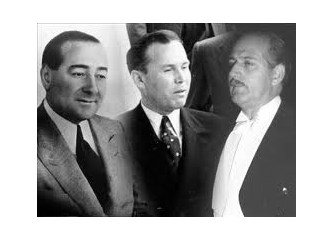
After that for a long time the public didn’t see the executions nor they saw the pictures of the bodies  until the day they saw the pictures of Hasan Polatkan and Fatin Rustu Zorlu on 15 September 1961and Adnan Menderes on17 September 1961. After the executions the pictures of their dead bodies were sent to the newspapers…


From the Memoirs of Ertugrul Mat
Demokrasi Yolunda Karinca Misali
On the Way to The Democracy

Translated by Elif Erkmen

Menderes_Polatkan_Zorlu RIP


15 Mayıs 2016 Pazar

Napolyonun Atı

Napolyon'un Atı

Sultan 3. Selim 1802 yılında Napolyon'a "Vezir" isminde bir at hediye etmiş.

Vezir was a gift from Ottoman Sultan Selim to Napoleon.

En 1802, Napoléon Bonaparte reçoit du sultan ottoman Selim III un somptueux cadeau : un bel étalon gris appelé « Le «Vizir» ». Selon la légende, au moment de s’en séparer, le souverain ottoman se serait adressé au pur-sang en ces termes : « Va, mon cher «Vizir». Va pour Mahomet, va pour ton sultan, va et deviens le plus illustre cheval de Napoléon ».
 Et le plus extraordinaire, c’est qu’il le devint ! 


Dualarla gelen at Napolyon a St. Helena adasındaki sürgün günlerinde arkadaşlık etmiş.
Napolyonun  ölümünden sonra Vezir önce İngiltere sonra da Fransa ya gönderilmiş. Atın 1829 ölümünden sonra içi doldurulurak önce Manchester da sonra da Fransa da sergilenmiş.
Bir ara Louvre Müzesinde tavan arasında unutulmuş.


1868 de Louvre a getirilişinden sonra 1870 Askeri Müzeye gönderilerek orada sergilenmeye başlamış
Halen aynı yerde bulunan Napolyon Mozelesine yakın bir yerde müze girişinde bir cam içinde sergilenmekte.
Napolyonun atı ve köpeği


Atın arka bacağında N harfi ve İmparatorluk tacını simgeleyen taç resminden oluşan Napolyon arması var.


Şu anki halinde bozulmadan saklayabilmek ve restore etmek için Müze bir bağış kampanyası açmış.
Aşağıda ressam Pierre Martinet tarafından yapılan bir resmi yer almakta.

Painting of Le Vizir by Pierre Martinet (via Musées de France)


Jacques-Louis David, "Napoleon Crossing the Alps" (1802-03), oil on canvas (viaKunsthistorisches Museum)


Napoleon's Stallion, Tamerlan by Theodore Gericault #Romantism

Arkadaslar bu post cok okunuyor, nereden hangi ülkelerden hangi şehirlerden okuduğunuzu yazarsanız çok sevinirim,  hepinize tesekkürler
This post has been read a lot, write to me where you have seen my post and where you are please. Thank you all.


Sultan 2.Selim


13 Mayıs 2016 Cuma

"Bi-taraf olan bertaraf olur" anlayışı

"Bi-taraf olan bertaraf olur" diyor hep, kendi hayat felsefesini yansıtıyor. Yani " Bir konuda tarafsız olanın o konuda söz söylemeye hakkı olmaz" demek istiyor, çünkü konuya objektif bakmayı bilmiyor.
Taraf olmak kolaydır herkes taraf olabilir, işine gelen tarafı ya da hoşuna giden tarafı hemen tutabilirsin, Insan menfaatini çok kolay hemen ilk bakışta kavrayabilir. Zor olan meseleyi iki tarafli görmek objektif bakabilmek. Onun icin daha iyi eğitim gerekir daha bilimsel düşünme kabiliyeti gerekir felsefe gerekir, toplum menfaatini kendi kişisel menfaatinin üzerinde tutabilecek bir ahlaki olgunluk gerekir; toplumun ilerlemesini de o saglar.
Bir konuda söz söyleme yetkisi, taraf olanlar kadar, taraf olmayan konuya objektif bakan bağımsız gözlem yapanlara da aittir. Hatta ikinci gruba daha çok aittir.
O niye birinci yolu tercih ediyor?
Çünkü kavgacı bir kisiliği var ve kavga her zaman ona oy olarak geri döndü. Kavgacı kişilik hep menfaatine oldu. Bu yöntem kendisi icin calıştığı için, aynı yönde devam etti.
O da yasadığı toplumun bir ürünü; serde Osmanlılık var, "Ya devlet başa ya kuzgun leşe" anlayışı; "Bir bayramlık gömlek bir idamlık gömlek" düşüncesi bilinçaltında aradan asırlarda geçse kolay silinmiyor...Sözün kısası bir üst basamağa çıkamıyoruz.

8 Mayıs 2016 Pazar

Tûtî-i mu'cize-gûyem ne desem lâf değil/ Nef'i


Nef'i

Nefʿī (نفعى) was the pen name of an Ottoman Turkish poet and satirist;
whose real name was ʿÖmer (عمر) (c. 1572, Hasankale, Erzurum– 1635, Istanbul).


Tûtî-i mu'cize-gûyem ne desem lâf değil
Çerh ile söyleşemem âyînesi sâf değil
Ehl-i dildir diyemem sînesi sâf olmayana
Ehl-i dil birbirini bilmemek insâf değil
Yine endîşe bilir kadr-i dürr-i güftârım
Rûzigâr ise denî dehr ise sarrâf değil
Girdi miftâh-ı der-i günc-i ma'ânî elime
Âleme bezz-i gevher eylesem itlâf değil
Levh-i mahfûz-ı suhandir dil-i pâk-i Nef'î
Tab'-ı yârân gibi dükkânçe-i sahhâf değil
”

https://www.youtube.com/watch?v=Ym4hRm_k6_c


6 Mayıs 2016 Cuma

Dedikodu

Dedikodu


Orhan Veli Kanik


Kim söylemiş beni
Süheylaya vurulmuşum diye?
Kim görmüş, ama kim,
Eleniyi öptügümü,
Yüksekkaldirimda, güpegündüz?
Melahati almişim da sonra
Alemdara gitmişim, öyle mi?
Onu sonra anlatirim, fakat
Kimin bacagini sikmişim tramvayda?
Güya bir de Galataya dadanmişiz;
Kafalari çekip çekip
Orada aliyormuşuz solugu;
Geç bunlari, anam babam, geç;
Geç bunlari bir kalem;
Bilirim ben yaptigimi.
Ya o, Muallayi sandala atip,
Ruhumda hicranini söyletme hikayesi?